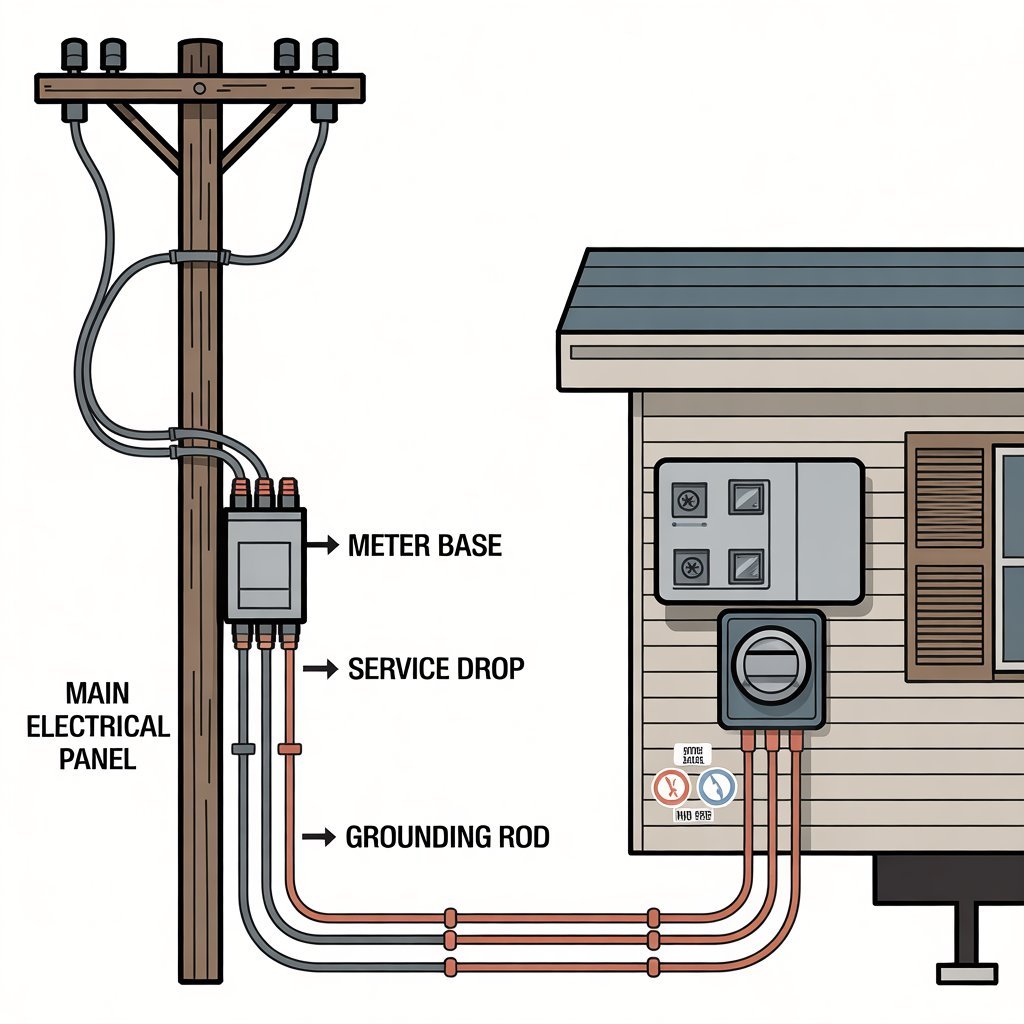
Setting up electricity for your mobile home is one of the most important steps before moving in. If your property has a nearby utility pole, you may need to connect power from that pole to your mobile home.
Many homeowners ask: How to run electricity from pole to mobile home?
In this guide, we’ll explain everything in simple English so it’s easy to understand. We’ll also cover safety, permits, costs, and when to hire a professional.

Understanding the Basics
Before starting, it’s important to understand how electrical service works in the United States.
When electricity comes from a utility company, it flows:
From the power company
To a transformer on the pole
Through service wires
Into your meter base
Then into your breaker panel
Finally into your home circuits
For a mobile home, the setup is similar to a traditional house, but there are special rules to follow.
Step 1: Contact Your Local Utility Company
The first and most important step is to call your local power company.
You need to:
Request new electrical service
Confirm pole location
Ask about connection requirements
Check distance from pole to home
The utility company usually handles the overhead service line from the pole to your service mast.
⚠ Important: Never attempt to connect directly to the power pole yourself. Only licensed professionals and utility workers can do that.
Step 2: Get Necessary Permits
In the USA, electrical work requires permits.
Visit your:
Local building department
County permit office
You may need:
Electrical permit
Inspection approval
Site plan
Permits ensure your installation meets National Electrical Code (NEC) standards.
Step 3: Install a Meter Base and Service Panel
Your mobile home needs:
A meter base (outside)
A main disconnect panel
Grounding system
Meter Base
This is where the utility company connects power.
Main Disconnect
Most states require a disconnect within sight of the mobile home.
Breaker Panel
Distributes electricity inside your home.
A licensed electrician should install these components.
Step 4: Choose Overhead or Underground Service
There are two ways electricity can run from pole to mobile home:
1. Overhead Service (Most Common)
Wires run above ground from pole to service mast.
Pros:
Lower cost
Faster installation
Cons:
Visible wires
Weather exposure
2. Underground Service
Wires run through buried conduit underground.
Pros:
Cleaner appearance
Better protection from storms
Cons:
Higher cost
Trenching required
Your utility company may recommend one option.
Step 5: Install Proper Grounding
Grounding is critical for safety.
Your system must include:
Ground rod (usually 8 feet long)
Grounding electrode conductor
Bonded neutral (if required by code)
Improper grounding can cause serious safety hazards.
Always follow NEC code requirements.
Step 6: Inspection
Before power is turned on:

A city or county inspector checks your work
They verify wiring, grounding, and panel installation
If everything passes inspection, the utility company will connect power.
Estimated Cost in the USA
The cost depends on:
Distance from pole
Type of service (overhead or underground)
Local permit fees
Labor costs
Average Cost Range:
$1,500 to $5,000+
Underground service can cost more due to trenching.
Always request multiple quotes from licensed electricians.
Safety Considerations
Electricity is dangerous. Here are important safety tips:
Never connect wires yourself to a power pole
Use licensed electricians
Follow NEC code
Install surge protection
Ensure proper breaker sizing
Improper installation can cause:
Fire hazards
Electrical shocks
Equipment damage
Safety must always come first.
Special Considerations for Mobile Homes
Mobile homes have unique requirements.
Service Rating
Most modern mobile homes use:
100 amp service
200 amp service
Choose capacity based on:
HVAC system
Appliances
Future expansion
Weather Protection
Install weatherproof components for outdoor setups.
Common Mistakes to Avoid
Skipping permits
Hiring unlicensed workers
Incorrect grounding
Using wrong wire size
Ignoring local codes
These mistakes can delay approval and increase costs.
DIY vs Hiring a Professional
Some homeowners ask if they can do it themselves.
In most cases:
Utility connection must be done by professionals
Panel installation should be done by licensed electricians
Inspection is required
DIY may save money, but electrical mistakes can be expensive and dangerous.
Hiring a professional is highly recommended.
Timeline for Installation
The process usually takes:
1–2 weeks for permits
1–3 days for installation
1–5 days for inspection approval
Time may vary depending on local regulations.
Frequently Asked Questions (FAQs)
1. Can I connect electricity from pole to mobile home myself?
No. The utility company must handle pole connection. Electrical work should be done by licensed professionals.
2. How far can a mobile home be from a power pole?
Distance affects cost. Longer distances may require stronger cables or additional poles.
3. Do I need a separate meter for my mobile home?
Yes, most mobile homes require their own meter base.
4. What size electrical service do I need?
Most homes use 100 or 200 amps depending on appliances and HVAC systems.
5. Is underground service better?
It looks cleaner and offers storm protection, but costs more.
Final Thoughts
Understanding how to run electricity from pole to mobile home is essential for safe and legal installation in the USA.
The key steps include:
Contacting your utility company
Getting permits
Installing meter base and panel
Following NEC code
Passing inspection
While it may seem complicated, working with licensed professionals makes the process smooth and safe.
Electricity powers everything in your home — from lights and appliances to heating and cooling — so proper installation is critical.

Hi, I’m Shan, the Admin behind MKNK. I’m passionate about smartphones and automobiles, and I enjoy researching new technology, vehicle launches, and market updates. I started MKNK to share reliable information, practical insights, and easy-to-understand guides for everyday users. I focus on accuracy, originality, and real value so readers can trust what they read and make informed choices.