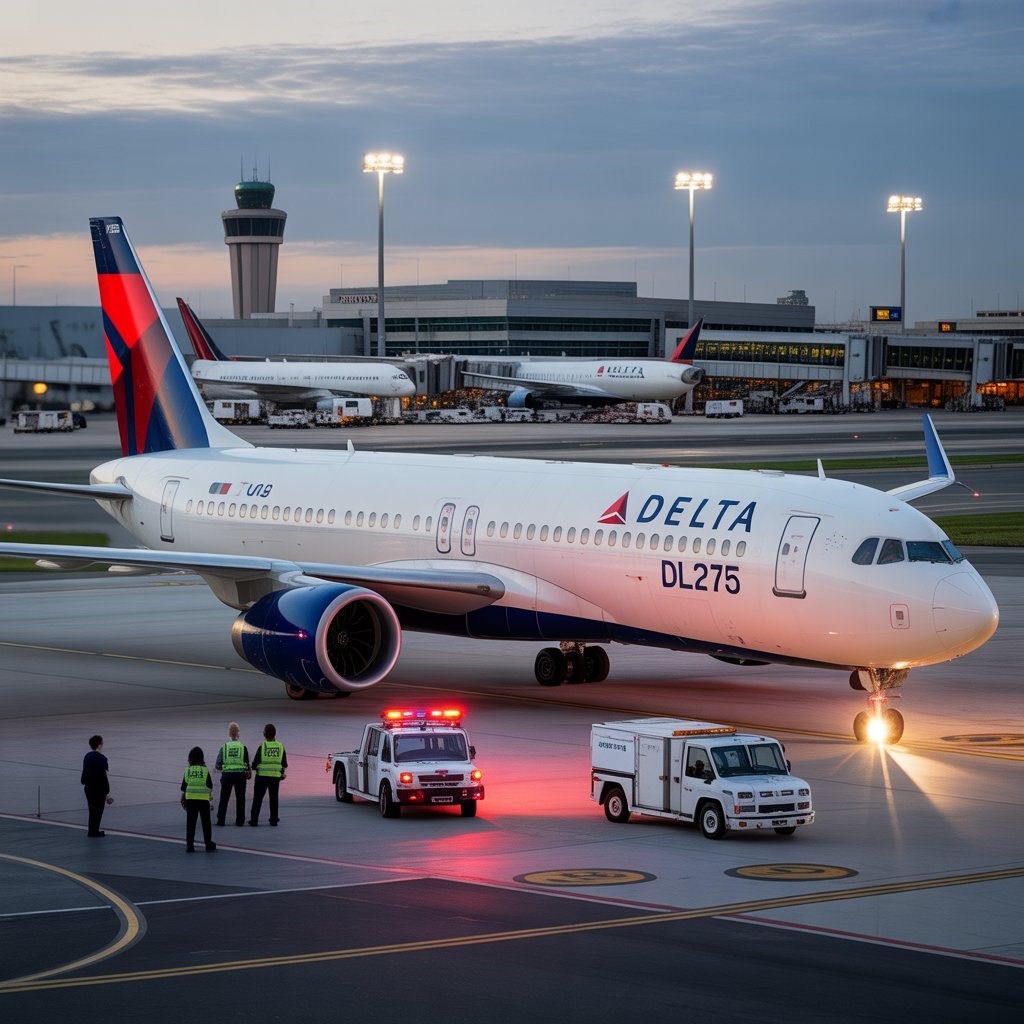
Air travel is generally safe, but sometimes flights face unplanned changes in the sky. One such case that grabbed attention in the United States involved Delta Flight DL275, a long-haul service that unexpectedly diverted to Los Angeles International Airport (LAX). Rather than continuing to its planned destination, the flight was redirected mid-air — and passengers on board understandably wanted answers.
This article explains what happened, why the crew made the decision, and what this type of diversion means for aviation safety and passengers in the USA. Everything is explained in simple English so it’s easy to understand even if you’re not familiar with aviation.
What Was Delta Flight DL275 and Where Was It Going?
Delta Flight DL275 is operated by American airline Delta Air Lines and uses a modern Airbus A350‑900 on long-distance routes.

On May 27, 2025, DL275 took off from Detroit Metropolitan Airport (DTW) bound for Tokyo Haneda Airport (HND). It was expected to be a routine 12- to 13-hour trans-Pacific flight carrying passengers from the USA to Japan.
Instead of flying over the Pacific and reaching Asia, the aircraft altered its course and landed at LAX — raising questions from travelers, observers, and aviation enthusiasts about what caused the diversion.
Why Did Delta Flight DL275 Divert to LAX?
There are strict procedures airlines follow when something unusual happens mid-flight. According to multiple aviation sources, the definitive reason Flight DL275 diverted to LAX was a malfunction in the aircraft’s engine anti-ice system, a crucial safety component for high-altitude flights.
What Is an Engine Anti-Ice System?
Planes flying at cruising altitudes — often above 35,000 feet — travel through extremely cold air. Even in clear skies, ice can form on aircraft surfaces or inside engine components. An anti-ice system helps prevent ice buildup by warming key parts of the engine using hot air from internal systems.
This technology is especially important in areas with very low temperatures, such as the North Pacific or near the Bering Sea. Without a functioning anti-ice system, ice accumulation could interfere with airflow inside the engine and impact performance.
The Mid-Flight Issue
During cruise at around 38,000 feet, the crew monitoring the Airbus A350’s systems detected irregular data related to the anti-ice system on one of the engines. The system wasn’t functioning properly, which triggered safety protocols.
Even though the issue did not immediately endanger the flight, aviation safety rules require pilots to respond conservatively to any failures involving critical systems — especially on long-haul flights over remote oceanic areas with limited diversion options.
Because of this, the flight crew chose to divert to the nearest equipped airport where specialized support was available.
Why Los Angeles (LAX) Was Chosen
When a flight chooses a diversion airport, several factors are considered:
1. Proximity and Flight Path
LAX was within a reasonable distance compared to other possible diversion points based on where the aircraft was at the time.
2. Maintenance Capabilities
Los Angeles International Airport is a major aviation hub with full maintenance facilities capable of servicing an Airbus A350 and addressing complex engine issues.
3. Connectivity and Passenger Support
LAX has extensive infrastructure, lounges, hotels, and airline support resources, which help airlines manage disrupted passengers — including rebooking and accommodation when necessary.
What Happened After the Diversion
Once the flight diverted and landed safely on runway 06R at LAX in the early AM, standard procedures kicked in:
The aircraft was inspected by maintenance teams.
Delta assisted passengers with itineraries, rebooking flights, and accommodations if needed.
The rest of the journey to Tokyo was canceled for that aircraft and had to be rescheduled for passengers on alternate flights.
No injuries were reported during the landing or the diversion itself, demonstrating the professionalism of the flight crew and Delta’s safety planning.
Safety Comes First
Diversions like this are not unusual in commercial aviation. When critical systems show abnormal behavior — even before a complete failure — pilots and airline operations teams must treat the situation cautiously. Prioritizing safety over schedule helps prevent potentially serious problems over remote oceanic airspace where emergency landing options are limited.
This event demonstrates how safety protocols and redundancy systems in modern aviation protect passengers even when something goes wrong in the air.
How Diversions Are Managed
Airlines and flight crews follow strict guidelines in case of in-flight issues. These protocols come from regulatory authorities like the Federal Aviation Administration (FAA) and international aviation bodies.
Here’s a simplified look at how diversions are handled:
Detection
Sensors and flight systems alert the crew about potential issues.
Assessment
Pilots evaluate the problem and consult airline operations and maintenance teams.
Decision
If continuing poses risk, the nearest safe airport is chosen for diversion.
Landing
The aircraft lands with full emergency services on standby as a precaution.

After-Landing Procedures
Maintenance checks and passenger care arrangements are made.
In most cases, diversions are precautionary and part of normal risk management.
Impact on Passengers
For travelers onboard DL275, the diversion likely brought inconvenience — such as delayed arrival and needing new flight arrangements. However, safety regulators and airlines treat passenger care as a priority. Delta would have offered:
Flight rebooking
Meal vouchers
Hotel accommodations (if required)
These are standard practices in cases of technical diversions to help minimize disruption.
Broader Implications for Aviation
Trans-Pacific flights like the Detroit–Tokyo service involve long hours over oceanic airspace with limited diversion options. This puts added emphasis on:
Aircraft maintenance
Real-time system monitoring
Predictive diagnostics
Aviation experts note that as aircraft systems become more complex, early detection and proactive responses — like the one for DL275 — are essential to maintaining high safety standards.
For example, advanced predictive model technologies are being explored to catch potential technical issues before they occur mid-flight.
What Passengers Should Know
If you ever experience a flight diversion, here are some simple tips:
Stay Calm
Pilots and crews train extensively for such scenarios.
Check Airline Updates
Use the airline’s app or notifications for real-time updates.
Keep Essentials Handy
Carry necessities in your carry-on in case of unexpected stops.
Rebooking
Airlines will usually rebook you on the next available flight.
While delays can be frustrating, diversions prioritize passenger safety above all else.
Final Thoughts
The case of Delta Flight DL275 diverted LAX highlights how modern aviation prioritizes safety even when technical systems show irregular behavior. Rather than risk a long ocean crossing with a compromised anti-ice system, the flight crew chose to divert to a well-equipped airport, ensuring a safe and controlled landing.
For passengers and observers alike, this incident serves as a reminder that airline safety protocols are designed to handle the unexpected — and that decisions like these are driven by caution, training, and a commitment to safe travel across vast distances.
Frequently Asked Questions (FAQs)
1. Why did Delta Flight DL275 divert to LAX?
It diverted due to a malfunction in one of the engine’s anti-ice systems, a critical safety component.
2. Was anyone injured?
No injuries were reported during the diversion or landing.
3. Where was the flight originally headed?
Detroit to Tokyo Haneda (Japan).
4. Why choose LAX?
Because it offers full maintenance, passenger services, and connectivity.


Hi, I’m Shan, the Admin behind MKNK. I’m passionate about smartphones and automobiles, and I enjoy researching new technology, vehicle launches, and market updates. I started MKNK to share reliable information, practical insights, and easy-to-understand guides for everyday users. I focus on accuracy, originality, and real value so readers can trust what they read and make informed choices.