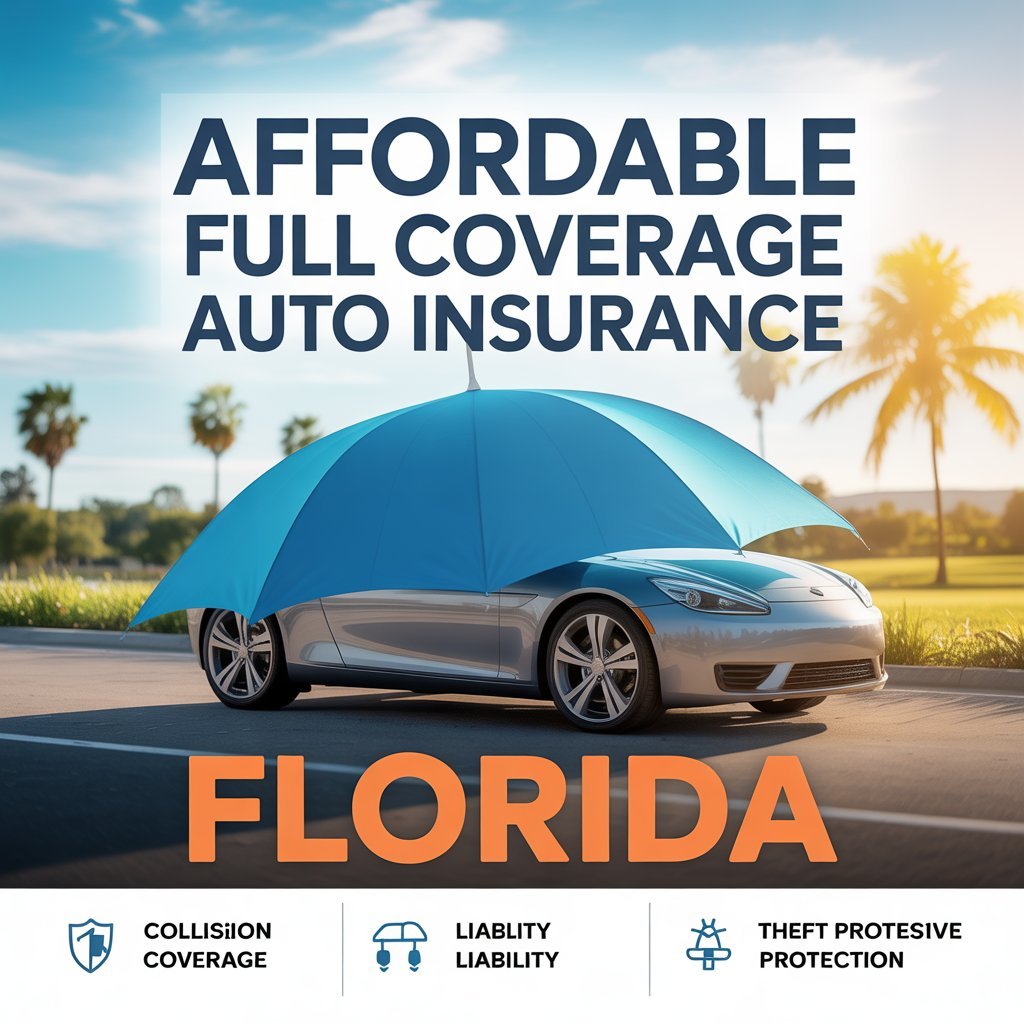
If you are searching for cheap full coverage car insurance in Florida, you are likely looking for strong protection at an affordable price. Florida drivers face high insurance premiums due to weather risks, heavy traffic, and uninsured motorists — which makes finding low-cost full coverage even more important.
This complete USA-based buyer guide explains everything in simple language. You’ll learn what full coverage includes, how much it costs in Florida, how to lower your premium, and which companies to compare.
If you’re ready to save money without sacrificing protection, this guide will help you make the right decision.
What Is Full Coverage Car Insurance in Florida?
Full coverage is not a specific policy type — it’s a combination of coverages that provide stronger protection than minimum state requirements.
In Florida, minimum required coverage includes:
$10,000 Personal Injury Protection (PIP)
$10,000 Property Damage Liability (PDL)
However, full coverage car insurance typically includes:
Liability Insurance
Personal Injury Protection (PIP)
Collision Coverage
Comprehensive Coverage
Many drivers also add:
Uninsured/Underinsured Motorist Coverage
Full coverage protects both your vehicle and other people involved in an accident.
Why Full Coverage Is Important in Florida
Florida has unique risks that make full coverage especially valuable:
Hurricanes and flooding
High accident rates
Expensive vehicle repair costs
Large number of uninsured drivers
Comprehensive coverage protects against storm damage and theft, which are common in Florida cities like Miami and Tampa.
If your car is financed or leased, lenders usually require full coverage.
How Much Does Full Coverage Cost in Florida? (2026 Estimates)
Florida ranks among the most expensive states for car insurance.
Average Annual Cost:
$2,600 – $4,500 per year
$215 – $375 per month
However, “cheap” full coverage is possible if you compare providers and apply discounts.
Your final rate depends on:
Age
Driving record
Credit score
ZIP code
Vehicle type
Deductible amount
Drivers with clean records and good credit typically qualify for lower premiums.
Best Companies to Compare for Cheap Full Coverage in Florida
When searching for affordable full coverage, compare quotes from trusted insurers such as:
GEICO
Progressive
State Farm
Allstate
Liberty Mutual
Each company uses different pricing formulas. One may offer cheaper rates for young drivers, while another offers better discounts for families.
Comparing at least 3–5 quotes can save hundreds of dollars per year.
What Affects Full Coverage Rates in Florida?
Understanding pricing factors helps you control your costs.
1. Driving Record
No accidents or tickets = lower rates.
2. Age
Drivers under 25 usually pay more.
3. Location
Urban areas like Miami often have higher premiums.
4. Vehicle Type
Luxury or sports cars cost more to insure.
5. Credit Score
Higher credit scores often reduce rates.
6. Deductible Selection
Higher deductibles lower monthly payments.
How to Get Cheap Full Coverage Car Insurance in Florida
Here are proven strategies to reduce your premium:
Compare Multiple Quotes
Never accept the first offer.
Increase Your Deductible
Choosing a $1,000 deductible instead of $500 can lower premiums.
Bundle Insurance Policies
Combine auto with home or renters insurance.
Maintain Good Credit
Improving your credit score can reduce your rate.
Ask for Discounts
Common discounts include:
Safe driver
Multi-car
Good student
Military
Defensive driving course
Drive Less
Low-mileage drivers may qualify for additional savings.
Step-by-Step: How to Buy Cheap Full Coverage Online
Buying full coverage online is simple:
Step 1: Gather Required Information
Driver’s license
Vehicle VIN
Address
Driving history
Step 2: Compare Quotes
Visit official insurer websites or trusted comparison platforms.
Step 3: Choose Coverage Limits
Select liability limits and deductibles carefully.
Step 4: Apply Discounts
Ensure all eligible discounts are included.
Step 5: Complete Purchase
Receive instant proof of insurance digitally.
The entire process can take less than 15 minutes.
Minimum vs Cheap Full Coverage – What’s the Difference?
Minimum Coverage
Lower monthly cost
Does not cover your car repairs
Limited financial protection
Cheap Full Coverage
Covers theft, storm damage, collisions
Better financial protection
Higher premium than minimum
In Florida, due to hurricane risks and traffic accidents, full coverage often provides better long-term financial security.
Is Cheap Full Coverage Worth It?
Yes — especially if:
Your car is worth more than $5,000
You live in a hurricane-prone area
You want protection against uninsured drivers
You cannot afford major repair costs out-of-pocket
While it costs more monthly, it prevents large unexpected expenses.
How Much Can You Save by Comparing?
Drivers who compare rates often save:
$500 to $1,500 annually
15%–35% on average
Insurance companies frequently adjust rates. Shopping annually ensures competitive pricing.
Common Mistakes to Avoid
When searching for cheap full coverage car insurance in Florida, avoid these errors:
Choosing the lowest price without checking coverage limits
Selecting a deductible you cannot afford
Ignoring uninsured motorist coverage
Entering incorrect information in online forms
Failing to review policy exclusions
Cheapest does not always mean best — balance price and protection.
Is Online Full Coverage Insurance Safe?
Yes, as long as you purchase from licensed insurers regulated by Florida authorities.
Before buying:
Verify HTTPS website security
Check company contact details
Confirm state licensing
Major national insurers provide secure online purchase systems.
When Should You Switch to Full Coverage?
Consider switching to full coverage if:
You purchase a new car
You move to a high-risk ZIP code
You want better financial protection
Your vehicle still has strong resale value
If your car is very old and low value, minimum coverage may be enough.
Why Florida Full Coverage Is More Expensive
Florida premiums are higher because of:
Frequent storms and flooding
High repair costs
Heavy traffic congestion
Insurance fraud in some regions
These factors increase overall risk, which affects pricing.
How Fast Can You Get Full Coverage?
Most insurers offer:
Instant online quotes
Same-day activation
Digital ID cards immediately
You can be fully insured within minutes.
Tips for Young Drivers Seeking Cheap Full Coverage
Young drivers can lower costs by:
Staying on a parent’s policy
Maintaining good grades (student discounts)
Completing defensive driving courses
Choosing a safe, lower-cost vehicle
Shopping around is especially important for drivers under 25.
Final Thoughts: Find Cheap Full Coverage Car Insurance in Florida Today
Finding cheap full coverage car insurance in Florida requires smart comparison and understanding your coverage needs.
To get the best deal:
Compare at least 3–5 providers
Choose a higher deductible if affordable
Apply all available discounts
Maintain a clean driving record
Review policy details carefully
Full coverage may cost more than minimum insurance, but it offers stronger financial protection — especially in a state like Florida with high weather and accident risks.
Take a few minutes today to compare quotes and secure affordable protection that fits your budget.
Frequently Asked Questions (FAQs)
What is considered full coverage in Florida?
It typically includes liability, PIP, collision, and comprehensive coverage.
Is full coverage required by law?
No, but lenders require it if your car is financed.
How can I get cheaper full coverage?
Compare quotes, increase deductibles, and apply discounts.
Is full coverage worth it in Florida?
Yes, especially due to hurricane risks and high accident rates.
Can I get full coverage the same day?
Yes, most insurers offer instant online activation.

Hi, I’m Shan, the Admin behind MKNK. I’m passionate about smartphones and automobiles, and I enjoy researching new technology, vehicle launches, and market updates. I started MKNK to share reliable information, practical insights, and easy-to-understand guides for everyday users. I focus on accuracy, originality, and real value so readers can trust what they read and make informed choices.