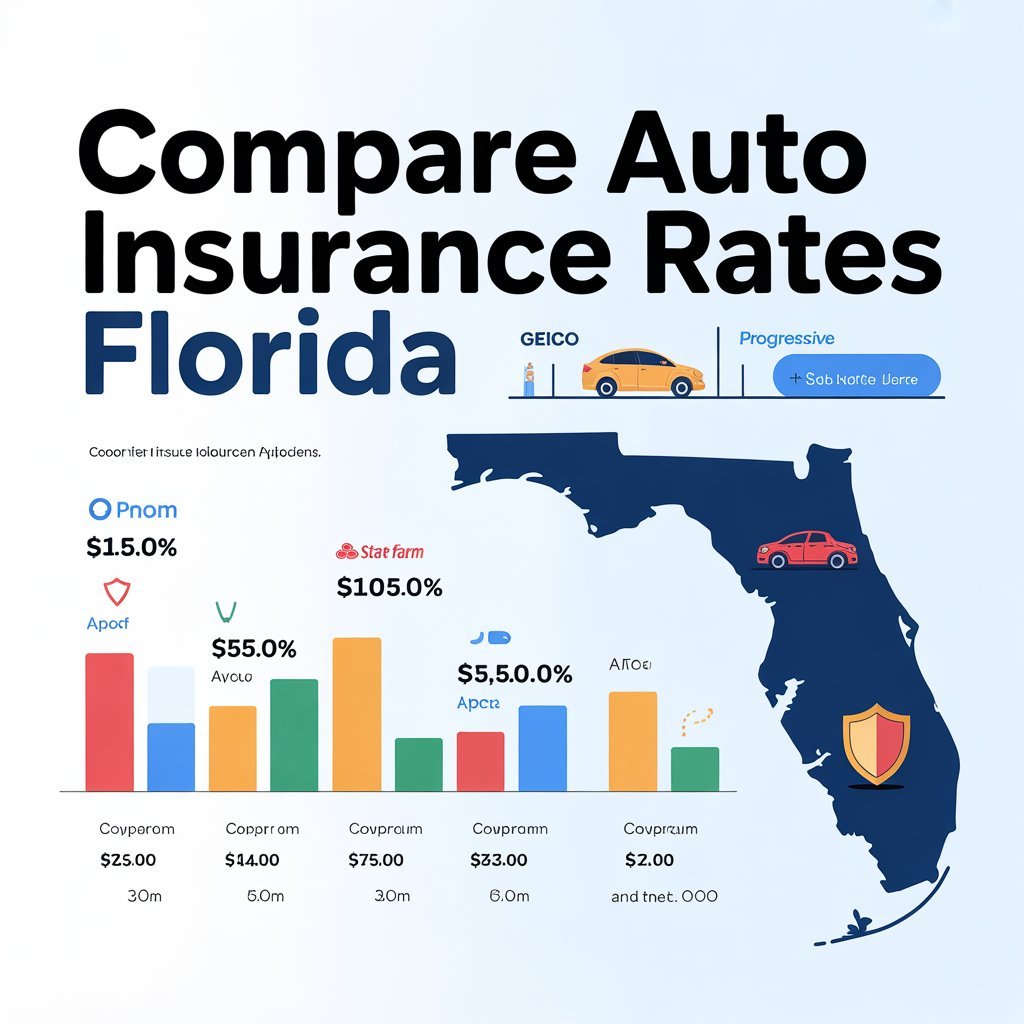
If you want to compare auto insurance rates in Florida, you’re already on the right path to saving money. Florida consistently ranks among the most expensive states for car insurance, which makes comparison shopping essential — not optional.
Whether you’re renewing a policy, buying a new car, or switching providers, this complete USA-based guide will help you understand how rates work, what affects pricing, and how to choose the best insurance company for your needs.
This article is written in simple language, easy to read, and designed for buyers ready to take action.

Why You Should Compare Auto Insurance Rates in Florida
Many drivers make the mistake of renewing their policy automatically each year. However, insurance rates change frequently based on:
Claims data
State regulations
Inflation
Weather risks
Company pricing models
Two companies may offer completely different prices for the same driver profile.
By comparing auto insurance rates in Florida, you can:
✔ Save $500–$1,500 per year
✔ Find better coverage options
✔ Discover hidden discounts
✔ Avoid overpaying for minimum coverage
Comparison shopping only takes 10–15 minutes but can significantly reduce your yearly costs.
Florida Auto Insurance Requirements (Legal Minimums)
Before comparing rates, you need to understand Florida’s insurance laws.
Florida is a no-fault state, which means drivers must carry:
✔ Personal Injury Protection (PIP)
Minimum required: $10,000
Covers your medical expenses regardless of fault
✔ Property Damage Liability (PDL)
Minimum required: $10,000
Covers damage you cause to someone else’s property
Unlike many states, Bodily Injury Liability (BIL) is not mandatory for most drivers — but it is highly recommended.
Minimum coverage is cheaper but often insufficient in serious accidents.
Average Auto Insurance Rates in Florida (2026 Estimates)
Florida’s average rates are higher than the national average due to:
High accident rates
Severe weather (hurricanes & flooding)
High number of uninsured drivers
Expensive medical claims
Estimated Annual Premiums:
Minimum coverage: $1,200 – $1,900
Full coverage: $2,600 – $4,200
Rates vary widely by city. For example:
Miami: Higher premiums
Orlando: Moderate
Jacksonville: Slightly lower
Your personal quote depends on several risk factors.
Top Companies to Compare in Florida
When comparing auto insurance rates in Florida, these national insurers consistently rank among popular choices:
GEICO
Progressive
State Farm
Allstate
Liberty Mutual
Each company uses its own pricing formula. That’s why comparing quotes is critical.
Factors That Affect Auto Insurance Rates in Florida
Understanding pricing factors helps you predict your quote.
1. Age
Young drivers under 25 typically pay more.
2. Driving Record
Accidents, speeding tickets, and DUI offenses increase premiums.
3. Credit Score
Florida insurers often use credit-based insurance scores.
4. Vehicle Type
Luxury cars and sports vehicles cost more to insure.
5. ZIP Code
Urban areas like Miami have higher rates than rural areas.
6. Coverage Limits
Higher coverage equals higher premiums.
7. Deductible Amount
Higher deductibles usually reduce monthly payments.
How to Compare Auto Insurance Rates in Florida (Step-by-Step)
Follow this simple process to compare effectively:
Step 1: Gather Your Information
Have ready:
Driver’s license
Vehicle VIN
Address
Driving history
Step 2: Request Multiple Quotes
Visit at least 3–5 insurer websites or use a comparison platform.
Step 3: Compare the Same Coverage
Make sure you compare identical coverage limits for accuracy.
Step 4: Check Discounts
Review eligible savings options.
Step 5: Review Deductibles
A low premium may hide a high deductible.
Step 6: Check Customer Service Ratings
Price matters — but service quality also matters during claims.
Minimum vs Full Coverage – Rate Comparison
Minimum Coverage
✔ Lower monthly payment
✔ Meets legal requirements
✘ Limited protection
Full Coverage
✔ Covers theft, storm damage, collisions
✔ Required for financed vehicles
✘ Higher premium
In Florida, full coverage is strongly recommended due to hurricane risks and high accident rates.
How Much Can You Save by Comparing?
Drivers who compare rates typically save:
15%–35% annually
$500 to $1,500 per year
Insurance companies regularly adjust pricing models. What was cheapest last year may not be cheapest today.

Smart Ways to Lower Your Auto Insurance Rate
If you want the best possible quote, use these strategies:
✔ Increase Deductible
Higher deductibles reduce monthly costs.
✔ Maintain Clean Driving History
Avoid traffic violations and accidents.
✔ Bundle Insurance Policies
Combine auto and home/renters insurance.
✔ Ask About Discounts
Common Florida discounts include:
Safe driver
Multi-car
Good student
Defensive driving course
Military discount
✔ Improve Credit Score
Better credit often leads to lower premiums.
Is It Safe to Compare Insurance Online?
Yes — as long as you use trusted, licensed providers.
Look for:
HTTPS security
Clear company contact information
State licensing details
Avoid unknown websites that promise unrealistic savings.
When Should You Compare Auto Insurance Rates?
You should compare rates:
Before your renewal date
After moving to a new ZIP code
After buying a new car
After improving your credit score
After a ticket or accident falls off your record
Comparing yearly ensures you always get competitive pricing.
Common Mistakes to Avoid
When comparing auto insurance rates in Florida, avoid these errors:
Comparing different coverage levels
Ignoring deductible amounts
Choosing minimum coverage without risk assessment
Not checking policy exclusions
Failing to review customer service ratings
Price alone should not be your only decision factor.
Online Comparison vs Insurance Agent
Online Comparison
✔ Faster
✔ More transparent
✔ Immediate quotes
Insurance Agent
✔ Personalized advice
✔ Helpful for complex cases
Most Florida drivers prefer online comparison for speed and convenience.
Why Florida Rates Are Higher Than National Average
Florida insurance costs are influenced by:
High population density
Frequent severe weather
Expensive medical claims
Fraud-related claims in certain regions
These factors increase risk for insurers — leading to higher premiums.
What Makes the “Best” Auto Insurance Company?
The best company is not always the cheapest. It should offer:
Competitive pricing
Strong customer service
Fast claims process
Flexible coverage options
Digital tools and mobile app
Compare both price and value.
How Fast Can You Switch After Comparing Rates?
Switching insurance companies is simple:
Choose your new policy
Confirm activation date
Cancel old policy (after new one starts)
Avoid coverage gaps
Most switches can be completed within one day.
Final Thoughts: Compare Auto Insurance Rates in Florida Today
If you want to protect your car and your finances, comparing auto insurance rates in Florida is essential.
The process is simple:
✔ Gather your details
✔ Request multiple quotes
✔ Compare identical coverage
✔ Review discounts
✔ Select the best balance of price and protection
Even a small difference in monthly premiums can result in major annual savings.
Florida drivers face unique risks — from heavy traffic to hurricanes — so choosing the right policy is more than just finding the cheapest rate.
Take 10 minutes today, compare your options, and secure coverage that fits both your budget and your lifestyle.
Frequently Asked Questions (FAQs)
How often should I compare auto insurance rates in Florida?
At least once per year or before renewal.
Is minimum coverage enough in Florida?
It meets legal requirements but may not fully protect your finances.
Does my ZIP code affect my rate?
Yes. Urban areas usually have higher premiums.
Can I switch insurance anytime?
Yes, as long as you avoid coverage gaps.
What is the biggest factor affecting rates?
Driving history and location are typically major factors.


Hi, I’m Shan, the Admin behind MKNK. I’m passionate about smartphones and automobiles, and I enjoy researching new technology, vehicle launches, and market updates. I started MKNK to share reliable information, practical insights, and easy-to-understand guides for everyday users. I focus on accuracy, originality, and real value so readers can trust what they read and make informed choices.